
Sulphur Previous Resident Sources
The era of your question sets the starting point. A modern parcel card leads into the deed chain. For a mid-century household, pair a map with newspaper coverage. Older family research usually ends at a library, an archive, or a surviving abstract. Exact Sulphur criss-cross directory years and the Clerk's online cutoff remain open questions. Keep both gaps visible.
| Source | Verified time span | Custodian or access point | Evidence supplied |
|---|---|---|---|
| Assessor parcel detail | Current plus 2025, 2024 and 2023 choices visible | Calcasieu Parish Assessor | Physical and mailing addresses, parcel, owner, legal description, deed references |
| Conveyance record | Online starting date not verified | Calcasieu Parish Clerk of Court | Recorded parties, transfer date, instrument and land description |
| Lake Charles city directory | 1895–1896 | Southwest Louisiana Genealogy Branch | Regional names, occupations and street locations, not a verified Sulphur run |
| Sulphur Sanborn map | July 1946, ten sheets | Library of Congress | Street, building footprint and use context, not occupant names |
| Sulphur-area newspapers | Title runs documented from 1916 onward | LSU holdings and Calcasieu Library | Addresses in notices, obituaries, ads and local events |
| Federal census schedules | Public after the federal 72-year release period | Archives and library resources | Households at the census date when the address can be matched |
Work backward from the newest reliable link. Never slot a person into a Sulphur address just because a surname, street, or ZIP code looks familiar.
Trace Sulphur Owners Backward
The current parcel card opens Calcasieu Parish deeds. It supplies the physical address, parcel number, legal description, and a book, page, or instrument reference. Take the reference to the Clerk. Confirm the deed there, then follow the seller's own earlier purchase to keep the chain moving backward.
- Search the Assessor by address and save the parcel number, legal description, current owner and deed reference.
- Find the cited conveyance through the Clerk index or request it from the central or Sulphur-area counter.
- Confirm both parties, the instrument and recording dates, and the lot, block or tract description.
- Search the seller as an earlier buyer, then repeat. Keep each deed in date order.
- When online access stops, ask the Clerk for older books, plats, indexes or a counter search tied to the same legal description.
Some access details stay unpublished. The Clerk's authenticated land-search fields and its exact online date range are not plainly listed, which marks an access limit rather than proof that earlier records are missing.
- Grantor
- The person or entity giving or transferring an interest in the land.
- Grantee
- The person or entity receiving that interest.
- Chain of title
- The linked sequence of recorded transfers for the same land.
- Legal description
- The lot, block, subdivision or survey wording that identifies land more reliably than an old street number.
Sulphur Deed References Need Proof
An Assessor deed reference is a pointer. It is not the official recorded image. The Clerk's own online terms say web records are not the official record either. A result marked released has passed the Clerk's recording, indexing, and verification steps for public view. A certified copy still has to come from the custodian.
The Clerk offers several access routes. Choose online accounts, counter visits, mail requests, or copy orders, with civil copies at $1 per page, a true copy at $5, and mortgage or conveyance certification at $10. Fees change. Confirm the current schedule. The central office sits in Lake Charles, while conflicting Clerk pages give two West Calcasieu service addresses, so check the active Sulphur-area counter before you drive over.
Sulphur Previous Residents at Library
The Calcasieu Library genealogy collections gather directories, newspapers, yearbooks, cemetery and church sources, family histories, land material, and an obituary index under one roof. That is a deep bench. The Southwest Louisiana Genealogy Branch in Lake Charles runs the main counter, while the Sulphur Regional Branch offers a closer stop. Staff take questions at genstaff@calcasieulibrary.org or 337-721-7110.
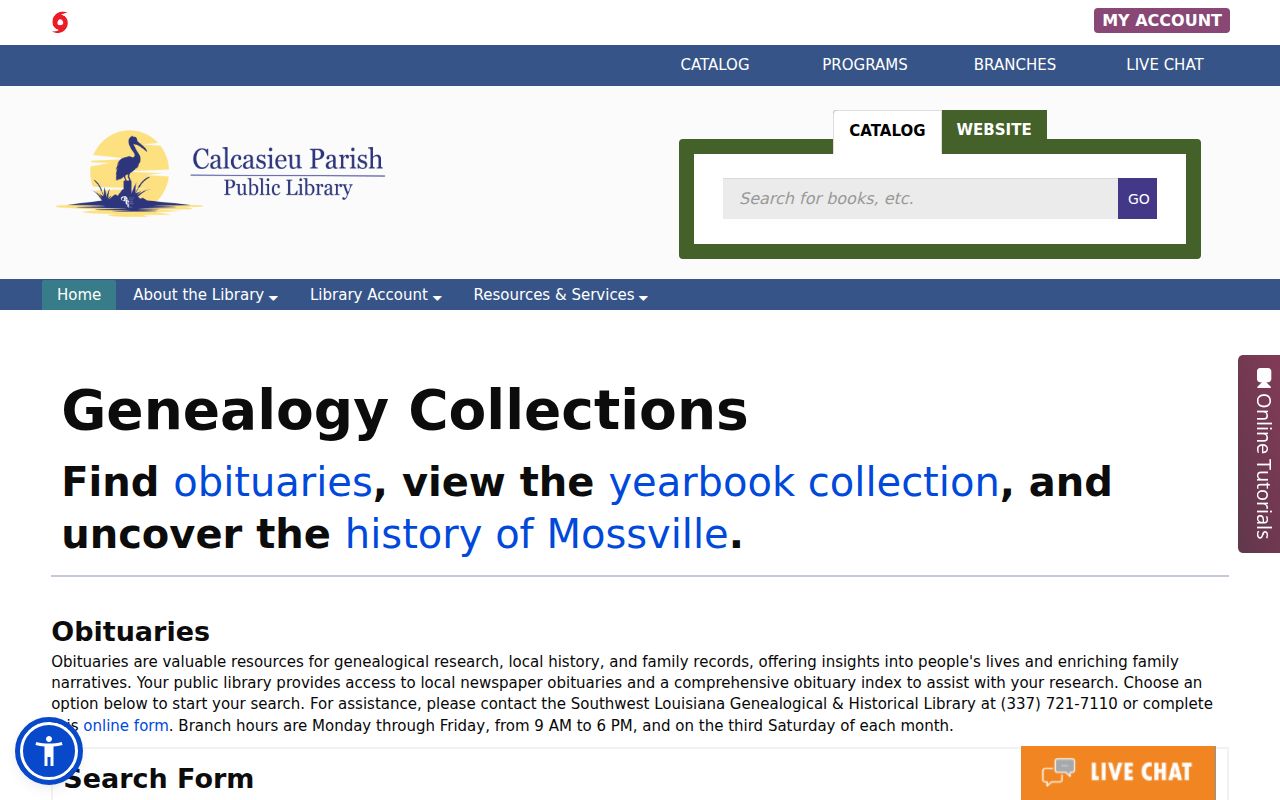
The collection page names useful source families. It does not promise a complete address-to-occupant index for Sulphur. Ask for reverse, criss-cross, street, and telephone directories separately. Request exact titles, years, formats, and call numbers too. The Lake Charles directory covering 1895–1896 is real, but call it that, not a Sulphur city directory. For reading and locating these volumes, see the Sulphur directory book page.
Map Sulphur Homes in 1946
The Library of Congress holds a Sanborn Fire Insurance Map set for Sulphur dated July 1946, ten sheets in all. A sheet confirms a street layout. Footprints, construction notes, and use labels appear as well. It cannot name every resident. Pair the mapped building with a deed, directory entry, census line, or dated news item before crediting a household. Save the sheet number and map date. Note the address wording and image area too. Compare those details with the current parcel's legal description and GIS position. If numbers conflict, search nearby addresses and old street spellings, since Sulphur publishes no official renumbering timeline to lean on.
Sulphur Newspapers Follow Households
LSU's parish holdings list traces a strong run of Sulphur-area papers. Calcasieu Progress survives from 1916. Southwest Builder spans 1933–1946, and its Sulphur run reaches 1987. Southwest Star covers 1954–1973. The lineup later became Southwest Daily News. Calcasieu Library offers remote Southwest Daily News access back to 2001 for library-card holders.
Search an exact address first. Then try the owner, occupant, subdivision, club, church, or business named in another record. Obituaries, legal notices, social columns, ads, and event reports can pin a person to a place on one date. A mention is dated evidence, not continuous proof. So record the title, issue date, and page for every find.
Pair Sulphur Directories and Census
Owners are only half the story. A directory places a named householder or business at an address between census dates, while a released federal census shows the household on one enumeration day. An enumeration district is one worker's patch. Browsing addresses inside the right district helps. It can rescue a search when the name index points somewhere wrong.
- Fix the modern parcel and write down all known historic address forms.
- Find the nearest dated directory or newspaper entry and record its exact wording.
- Locate the corresponding released census schedule by place and enumeration district.
- Compare names, ages and relationships with care, then return to the next directory or news year.
- Use deeds and probate files to distinguish ownership from occupancy.
Federal schedules open to the public after 72 years. No published crosswalk matches Calcasieu reels to districts, so ask the genealogy branch or an archives desk instead of inventing a district number.
Why Sulphur Trails Break Before 1910
Fire is the reason most Sulphur trails go cold before 1910. The Lake Charles courthouse burned that year. It took many early records with it. Then McNeese announced a major rescue in 2026. The rescue is a collection of pre-1910 Imperial Calcasieu title material. Abstracts, photocopies, surveys, maps, and property and cemetery records are all part of it. So a previous-residents search may expect an original deed. It may instead land on an archival reconstruction.
The McNeese pre-1910 title-record announcement lays out the full scope of the collection.
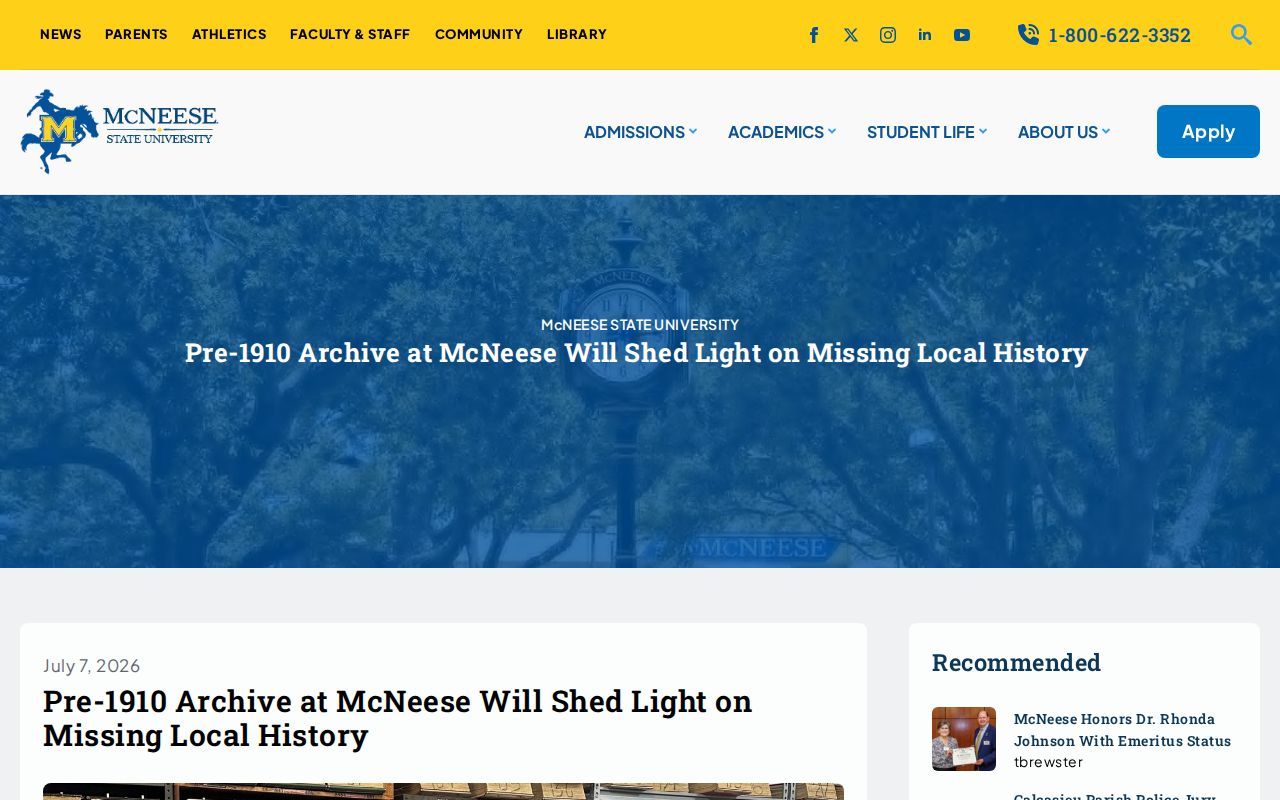
The archive may bridge the burned gap. Still, label each abstract or copy by type and check it against surviving later instruments before trusting the chain.
Close Sulphur Resident Timelines
An obituary can tell you when a household ended. A probate succession can show when an heir took the property or when a surname shifted in the chain. The library obituary index takes a surname, first and middle name, and death date, with more advanced fields described alongside them. Calcasieu Clerk civil records hold successions, wills, and probate matters, though the exact online civil search fields sit behind account access.
For older public periods, the Louisiana State Archives vital-record indexes are the resource. Birth records stay confidential for 100 years. Death records stay closed for 50 years before the public index period. Relationship, eligibility, and identification rules apply to anything earlier.
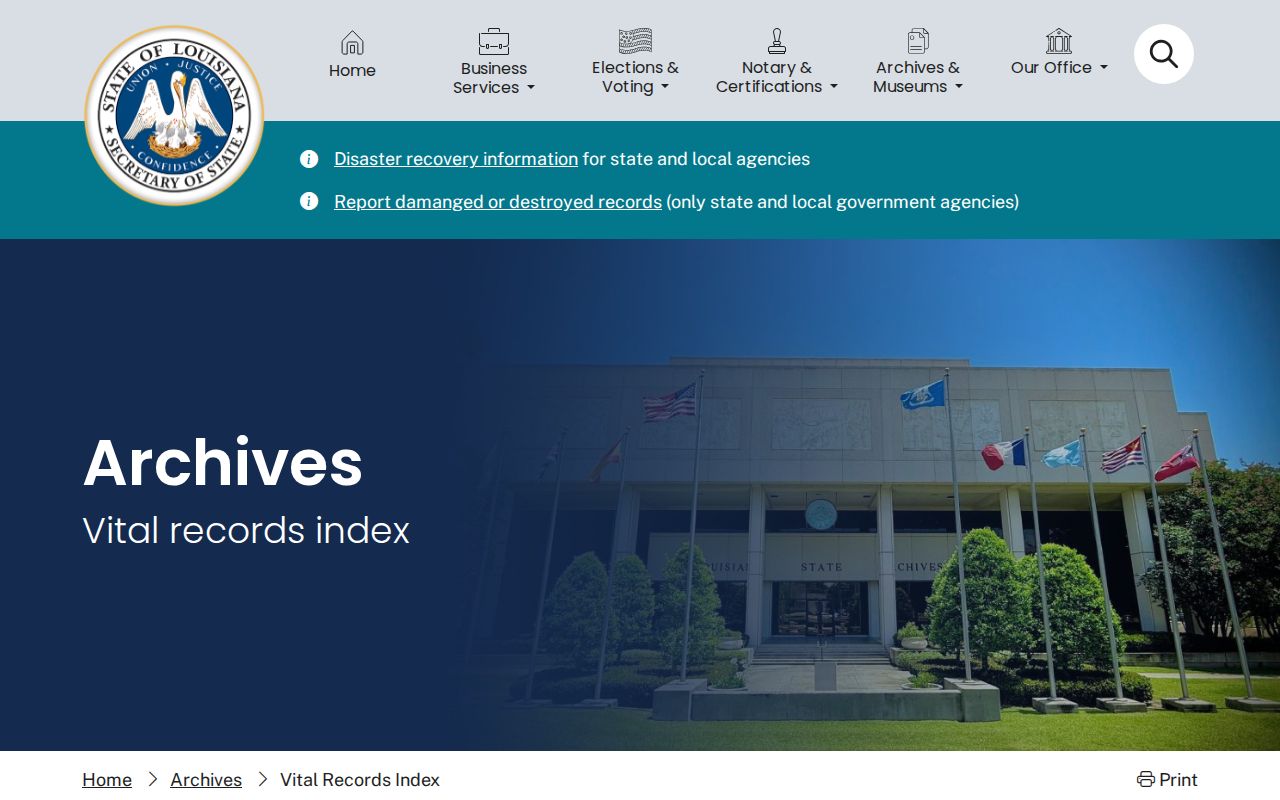
A dated index hit can anchor a family-history lead nicely. Match it to the right person first, though, before tying it to a Sulphur address.
Use Sulphur Previous Residents Lawfully
A deed proves ownership, not residency. Not everyone who lived on the land appears in it. Each directory line, census entry, or obituary carries its own date and scope. So label every fact accordingly. Note when an address is only a Sulphur mailing label. The parcel may sit beyond city limits. Keep protected details about living people out of any public notes.
This kind of past-residents research serves family history, heir and estate questions, and preservation work. It also serves plain curiosity about a house. If a record is restricted, follow the stated eligibility or request process. Never work around a custodian's privacy rule by stitching together partial data from other sources.
Lawful use. Research Sulphur past residents for a legitimate personal purpose, and never use an address trail to stalk, harass or harm anyone.